All Aboard Boats: Boat Detailing Tips
Recent Comments
- sl786982 on Avoid Being Boarded By The Coast Guard (287)
- calvinbrock735 on Avoid Being Boarded By The Coast Guard (287)
- jackymiky on Avoid Being Boarded By The Coast Guard (287)
- calvinbrock735 on Avoid Being Boarded By The Coast Guard (287)
Blog Listing
- Boating Advisor (15)
- All Aboard Boats (82)
- Overboard Boater (28)
- Prop Wash (29)
- On Performance Boats (19)
- Fine Tooning (22)
- Ed's Boat Tips (12)
- Ride Liquid (11)
- Tech Talk (7)
- What Boaters Say (1)
All Aboard Boats: Boat Detailing Tips
Casting a farewell glance back at my boat as I walk down the dock after a day afloat is one of the special pleasures of boat ownership. That's why I delight in making sure my boat looks great all the time. Good thing. My 12-year-old Regulator 23, Breakaway, sports flag-blue gelcoat. Dark colors like mine are the toughest to maintain.
Fortunately, having worked in boatyards for more than a decade, I have a good handle on the principles of detailing boats. Tips gleaned from the pros I worked with ensure me the pride in ownership I crave. Here are a few I’d like to share with you.
Remove the old wax before you do anything. Wipe the hull down with acetone or a dedicated product like Pettit’s D95 Dewaxer. Use several rags, and turn them frequently so you don’t reapply the wax you remove.
Use a machine. Save the “hand-rubbed” finish for woodwork. A polisher makes quicker work using less material and does a better job of removing compound and wax. And it’s in the removing that these products achieve the fine finish. I use a rotary polisher, which is quicker, spatters less and doesn’t “kick” when working around transom rings, rub rails, vent fittings and other obstructions. But if you’re inexperienced, I suggest a random orbit polisher, like Shurhold’s Dual Action model, which is more forgiving and doesn’t allow you to goof and create swirl marks.
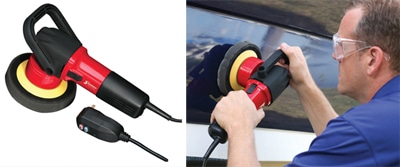
A machine, like Shurhold’s Dual Action Polisher, makes it easier to get good results when detailing your boat.
White-glove treatment. I know I said use a machine, but there are many areas aboard that require you to apply compound and wax by hand. The areas between gauges and instruments, the narrow borders surrounding hatches and companionways, and beneath cleats and grab rails are some of these. Instead of using a rag, don a pair of clean cotton gloves and use your fingers like custom-conformable polishing pads. Works great.


Always say wonderful of knowledge that you try to give to a readers, this is full of benefits.
Distance Learning Programs || MBA Distance Education || Distance Education University || Distance Education Colleges
Great !
Canada Drugstore Online
Cheapest Pharmacy Online
Online Drugstore Generic Pills
Generic ED Drugs Without Prescription
Order Meds Online
Generic Drugs Discount
Order Pills Generic Drugs
Generic Drugs Here
DrugsInfo Online
Med-Board Online
Meds Drugs Online
Ciena-Healthcare
Medicine-Doctor Support Online
Generic Medicaments From USA
I found lots of interesting information here. The post was professionally written and I feel like the author has extensive knowledge in this subject. girlsjewellery
I appreciate you posting thanks for sharing Detailing Tips.
Nice post, Kevin. I agree with the advice about newbies using a random orbit machibe vs rotary. I would add that wool pads do a better job cutting oxidation when using compound and make quicker work of "waxing -off" from gelcoat. The foam pad, as shown in the pic, is more typically used for applying sealant to automotive finishes--or painted boats.