Q: We own a brand-new Rinker Fiesta Vee 330 midcabin cruiser. We’d like to keep it like new. Our old boat got musty during winter lay-up. Is there a way to protect our new boat from the same fate? I’d like to get out on the water with minimal hassles in the spring. Any suggestions? ERIC TAVERA GREENSBORO, NC
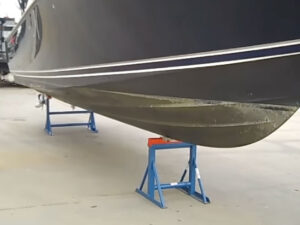
A: In the South, you can’t count on dry, cold air during winter. The weather can be mild and wet. Not that folks in the north can get away with slipshod winter preparation. We all have to worry about the same problem-mildew. When I get my boat ready for winter, I remember this mnemonic: COLD, which stands for clean, open, loose, dry. If you keep your boat’s furniture in this condition, it’s almost impossible for mildew to grow. I won’t mention your boat’s equipment, because in my opinion, everything except the anchor and rode should be moved home for dry, secure stowage. I always start my winter prep by removing all the electronics, personal gear, bedding, bunk cushions, and curtains off the boat. If you have a garage with exposed joists, lay the foam inserts from the bunk cushions over them. When the boat is empty, go belowdecks and open anything that’s closed. One warning: Beware of open floorboards when you return to the boat for a visit, you don’t want your first step onboard to be a doozy.
Next, scrub every inch of the boat with a low-impact soap, such as Murphy’s Oil. After the nonporous surfaces are dry, wipe them down with a paper towel soaked with apple cider vinegar. It will help keep things smelling sweet and create a hostile environment for any mildew spores that may be blowin’ in the wind. As soon as the boat is out of the water, drain and clean the bilge and remove the bilge plug. Sponge out any stray water and toss down some rock salt, but be sure it doesn’t come in contact with the bronze drain fitting. When you cover the boat, leave some room for ventilation; I prefer a canvas that can breath as no plastic tarp can. I build a frame by using two-by-fours as the ridgepole and furring strips for rafters.
Finally, tie the tarp down securely. Leave the ends open so that air can circulate from one end of the boat to the other. And leave the hatches open a few inches to foster good air circulation. Also, the companionway should be left open at least partway. Remember: clean, open, loose, dry. Keep these in mind as you ready your boat for winter.
AUTO PUMP
Q: My boat’s engine has two water leaks that need to be repaired. One is in the circulating water pump and the other is around the rubber gimbal boot. Can I use an automotive water pump as a replacement for the circulating water pump? Also, I think the gimbal bearing should be rep laced because of its age. Is this a do-it-yourself job? LARRY HORTON SOUTHSIDE, AL
A: A standard automotive water pump will work fine, but it wouldn’t be my first choice. There aren’t any safety concerns as you’d have with an automotive fuel pump, carburetor, or distributor, but there is one important difference. The backing plate on a marine pump is made from a corrosion-resistant metal. Even if you boat in fresh water and corrosion isn’t an issue, I would recommend getting the pump from a marine engine dealer instead of your local auto-parts store.
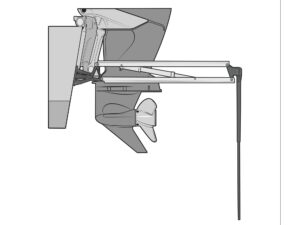
Replacing the gimbal bearings is a do-it-yourself job only if you’re a certified mechanic. You have to use special tools and techniques to align the engine after you’ve replaced the gimbal bearings. The consequences if this is done wrong, such as broken shafts, are too horrible and expensive to discuss. Take it to someone who knows what he’s doing and while you’re there have him install a new U-joint. By the way, if the rubber boot fails, your boat will sink like a stone. Get this job done ASAP.
FUEL ARRESTER
Q:My boat’s fuel tank holds about 35 gallons. This season I’ve noticed that it’s difficult to add fuel to the tank. At my marina the auto-shutoff keeps kicking in. I’ve removed the vent exit while fueling but haven’t had any luck. Any ideas? BARRY RAY KILLEN, AL
A: First things first: Are you using the exact same pump and nozzle as last season? Did your marina install new gas pumps or nozzles? Does this occur everywhere you fill up? If this fueling problem started all of a sudden and you can’t blame the gas pump, there could be a problem with the vent line or fill hose. Open the boat and get a gander at the large fill hose. That’s the one that goes from the deck fill fitting to the tank. Check for kinks or bends that would cause the gas to back up. If it looks okay, move on to the vent hose, which meanders from the tank to the topside fitting. Disconnect the hose and blow. Do you notice any restriction or resistance? You’d be surprised at what could be lurking in the hose. Wasps and yellow jackets, for example, often make hoses home. Then there’s the vent fitting itself. If you look closely, you’ll see a wire-mesh screen inside the opening. It’s a flame arrester. If it gets corroded, it can restrict airflow and make the tank difficult to fill. The entire fitting should be replaced if the screen gets corroded. I’ve got a feeling, however, that your boat hasn’t changed; the marina most likely installed new pumps or nozzles and that’s what’s causing the trouble.
PROP PUP
Q: I have a 20′ cuddy cabin with a 4.3L MerCruiser Alpha One V-6 stern drive. If I have more than two passengers onboard, the boat won’t plane. I’m currently running a 14″-by-19″ prop. According to the sticker, the WOT range is 4400 to 4800 rpm. My engine runs between 5200 to 5500 rpm at WOT. Should I change to a 21″ pitch prop? ED ZIEMBA RIVERVIEW, MI
A: Unless the hub is slipping, you’ve got to change the prop – soon. Running an engine with a prop that’s too small for it is bad news. Save yourself some time and money and start with a 23″ wheel right away. I think you’ll find it fits just right. As a rule of thumb, for every inch of pitch increased, WOT rpm decreases by 150 to 200.