Header - Ads / PCD

Cool and Unusual

Can you survive hypothermia? Our man braves frigid waters to learn the cold, hard truth.
By Jim Thornton
100%
or
0%

Related Articles

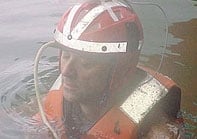
The winds swirling over the Graveyard of the Pacific are a raw 52°F. I'm not exactly dressed for the weather. Actually, I'm not dressed at all, unless you count the electronic thermometer residing in my colon.

Retired Coast Guard Rear Admiral Al Steinman, M.D., a hypothermia researcher, has just talked me through the rectal probe insertion process. Now he snakes an attached wire to a nearby computer console, flips some dials, and announces that my core body temperature is just over 100°F. In three minutes, I'll be taking a late- autumn dip into the cold broth off Washington's Cape Disappointment Coast Guard Station-unless, that is, I can win a last-minute medical reprieve. I suggest I may be feverish. "No, no," Steinman assures me. "Rectal temperatures always run a degree or so higher than the oral 98.6. You're completely normal."

Well, maybe not completely normal. I am about to jump into bone-chilling water. But that's not due to a mental defect, rather, it's to give boaters a first-hand look at the effects of hypothermia.

If you don't live in the tropics, getting chilled to the core is not a hypothetical situation. According to a Coast Guard study, some 8,000 recreational boating accidents are reported annually. In one year, these accidents caused 4,555 injuries and 821 deaths. Approximately two-thirds of the fatalities occurred following immersion in water. Hypothermia or drowning-and often a hellish mixture of the two-accounted for a whopping 74.3 percent of those deaths. With that in mind, I'm going to become a human popsicle so you can understand what hypothermia does and how to survive it.

Mr. Frosty

If anyone in the country knows how to supervise such a bone-chilling exercise, it's Admiral Steinman. In a series of experiments in the mid-1980s, Steinman monitored the plummeting core body temperatures of volunteer "Popsicle Men," who agreed to enter bitter waters under a host of different sea conditions, outfitted in everything from neoprene survival suits to T-shirts. In the process, Steinman has helped advance scientific understanding of what happens to people in cold-water immersion situations.

For BOATING readers, I don some Speedo trunks, then step to the end of the fueling dock, Steinman holding my wire tail like a wedding attendant. En route, we pass paramedic Doug Beardsley, ready to intervene. Beardsley shows me his bag of tricks: a forced-air rewarmer, warm IV fluids, intubation gear, an electric defibrillator, and various heart drugs. "Hopefully, we won't have to go as far as using the cardiac stuff on you," he says, "but I have it if we need it."