Engine winterization is a more sophisticated process now. Catalytic converters and ethanol-laced gasoline add important steps to the process.
Put your boat on a trailer or haul it out and block it level. This ensures that the raw-water side of the cooling system will drain. Any water left in might freeze, expand and crack the cooling system components.
Don’t drain the closed-cooling side of the system, since it’s filled with an antifreeze-and-water solution, though it should be flushed and refilled according to the engine’s maintenance schedule. Also check the antifreeze/water ratio in the closed-cooling side; the owner’s manual will list the proper one for your region. A drop in the concentration may indicate a leak in the heat exchanger. Gauges for checking this are available at auto parts stores. If the ratio has dropped, have the heat exchanger inspected for leaks.
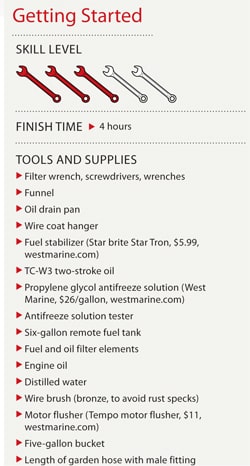
Let’s look at the process of winterizing a V-8 with a closed-cooling system. Next month we’ll cover winterization of the drive component of a stern-drive package.
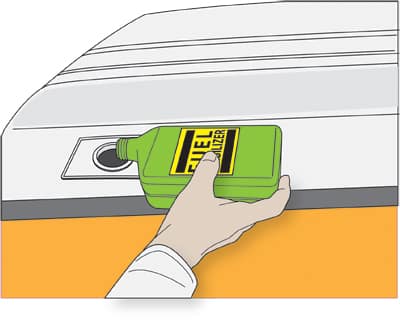
1. Fuel System and Fogging
Add fuel stabilizer to the tank and run the engine so the treatment circulates. Shut it off and let it cool. Next, “fog” the engine from a six-gallon remote tank. Add five gallons of gas, two quarts of TC-W3 two-stroke oil and five ounces of fuel stabilizer. Disconnect the hose from the main tank at the filter. Connect the remote tank and run for five minutes at 1,300 rpm. Shut down and replace the oil, filter and fuel filter.
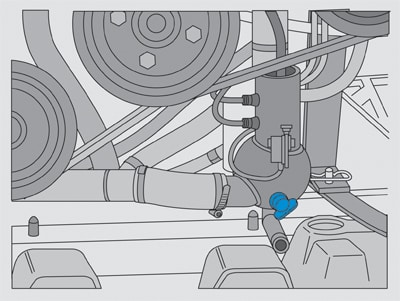
2. Draining the Raw Water
Fully drain the raw-water side of a closed-cooled engine, including the manifolds, seawater pump and heat exchanger. Drain-plug locations vary by engine, so check your manual. Disconnect the raw-water inlet hose, then remove the drain plugs. Use a stiff wire to clear any sediment blocking the drain. Also, bump the ignition key to crank the engine — without starting it — to purge the seawater pump.
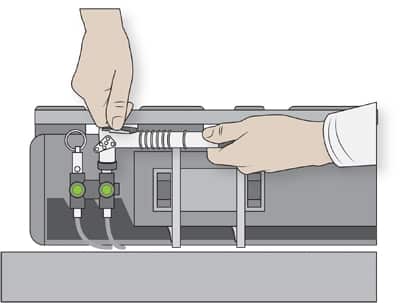
3. Air-Activated Draining
Engines like the MerCruiser 350 MAG MPI offer air-activated drainage using a supplied hand pump. Lock it onto the actuator fitting and pressurize the system until the green indicators extend. (No need to remove drain plugs; the air should purge the water. If not, drain as described in Step 2.) Next, crank the engine without starting to purge the seawater pump. Remove the hand pump.
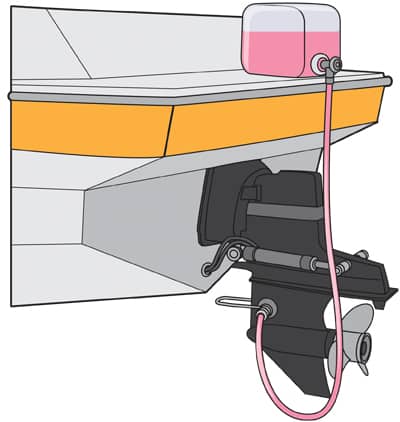
4. Filling the Raw-Water Side With Antifreeze
After draining, replace the plugs. Fill with a propylene glycol antifreeze containing rust inhibitors to protect nooks and low spots where raw water might sit. Place a motor flusher (“earmuffs”) over the water pickups, plumbed to draw the antifreeze from a bucket. Run the engine on your winter-mix fuel tank until the pink antifreeze solution exits the exhaust.
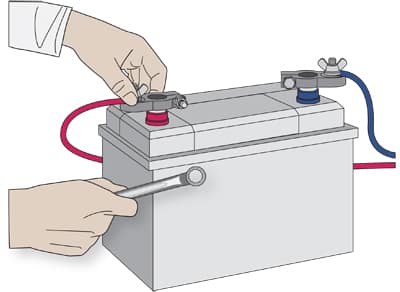
5. Battery Storage
Remove the batteries from the boat and charge them. If they don’t hold a charge, wait until recommissioning in the spring to replace them (watch for sales over the winter). Clean the terminals with a wire brush using water and baking soda to neutralize acid; coat with light grease; check the battery cables for cracked insulation and corrosion, and replace if they show signs of wear and tear.
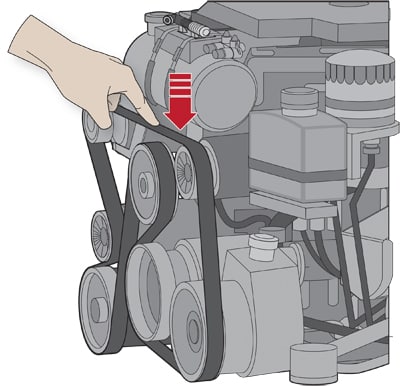
6. Inspecting Everything
Consult the owner’s manual for any other maintenance steps. In addition, give the engine, drive, steering and tilt-and-trim systems a thorough inspection. Check the belts, wires, shift cables, exhaust manifolds and hoses, and bellows for wear, cracks, corrosion or other damage. Check the hydraulic fluid levels in the power steering and trim pumps. Also inspect the fuel hoses and replace if necessary.
To Fill or Not to Fill
With ethanol-laced fuel, not everyone agrees on the proper procedure for winterizing a fuel tank. According to MerCruiser, if you can find ethanol-free gasoline, fill the tank and treat it with fuel stabilizer. Otherwise, the tanks should be drained as low as possible and then treated with fuel stabilizer from makers such as Sierra, Sta-Bil, Star brite and ValvTect. These are formulated to combat the deleterious effects of ethanol. In any case, MerCruiser warns that the tank should not be run completely dry, because running out of fuel can damage catalytic converters in newer engines.