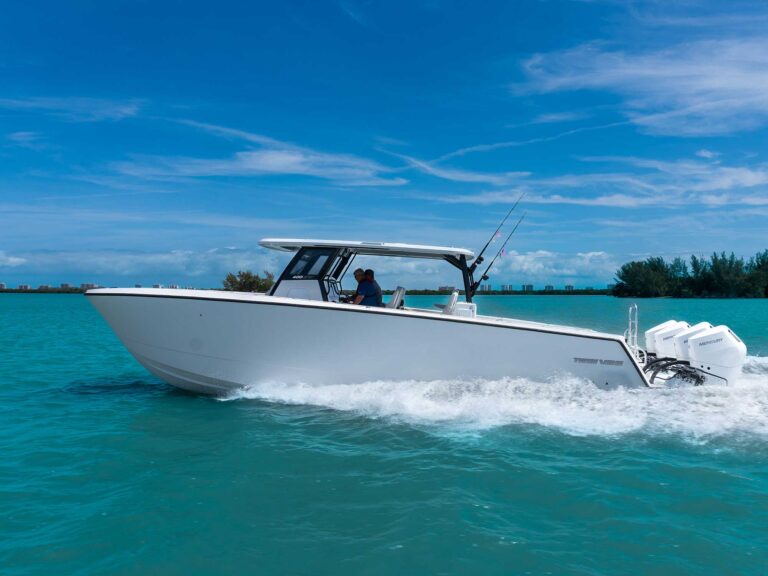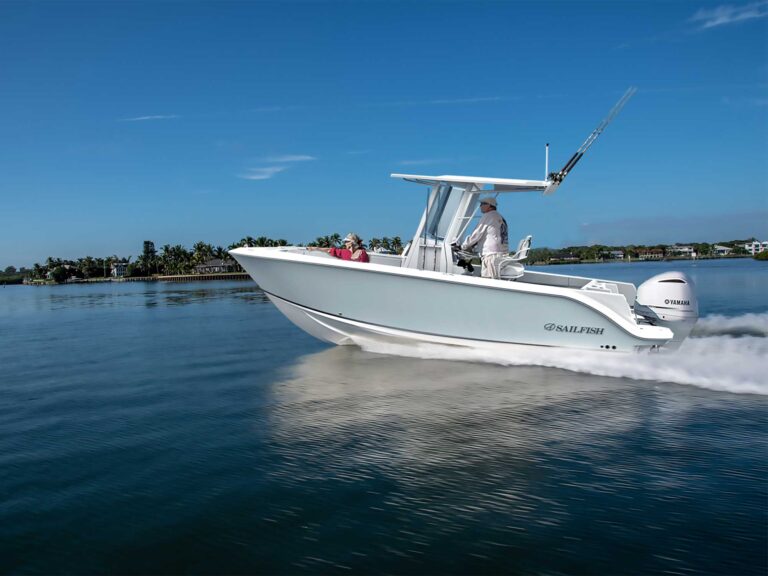
Let me get this straight…you put the boat in the water?” That boat company rep’s statement was an actual response to a customer’s complaint about a service issue with his year-old diesel-powered boat. The boat and motors were still under warranty and had seen only 160 hours of service. But neither the boatbuilder nor the motor manufacturer would cover the repair because each said the cause of the damage was outside the parameters set down in the warranty. To make sure you get the coverage you expect – the coverage you’re assured of by that smiling face holding a pen in one hand and a sales contract in the other – follow these tips before buying your next new boat.
WHAT’S COVERED? Warranties against a cracked block are great. But turbocharger, injector, or exhaust problems are far more likely to occur. Ask whether coverage for these and other accessories extends for the full term of the warranty.
PAY RATE. Manufacturers often pay a fixed hourly rate to all their dealers for repairs covered under warranty. But dealers in different areas of the country have different shop rates. Ask what these rates are and make sure your local dealer is willing to work for the manufacturer’s reimbursement rate.
TIME IS PRECIOUS. Even if the rates jive, the allotted times for repairs may not. Your mechanic has to work on an installed motor in a specific boat, not one that’s on a table in a manufacturer’s lab. Service accessibility varies by boat. Ask for an estimate comparing the warranty’s allotted times for common repairs against the estimated time your dealer needs to perform those repairs.
CHARITY WORKS. If the times and rates are disparate, ask your dealer how willing he is to make up part or all of the difference. If he’ll play ball, get something in writing: have it written into the sales contract.
OVERCROWDING. The smaller the boat, the more accessories – such as gensets and water heaters-clog the engine room and impede service. Your desire for convenience can often lead to repairs that go beyond a warranty’s coverage. Be reasonable when repair time seems unreasonable–it often isn’t.
TURN IT UP. A lugging engine may develop problems without a clear-cut cause – exactly the type of scenario that can leave you high and dry, warranty-wise. During your demo ride, run the boat at wide open throttle. Compare the tachometer’s reading against the engine’s specs. Ideally, a new engine should “turn up” about 100 rpm more than its rated maximum range. That way, it will fall within the correct range once you paint the bottom and load the boat with fuel and gear.
WHOSE FAULT IS IT? If you skimp on care and maintenance, you deserve to be left out in the cold. But improper clearances, splashing bilge water, and shafts that abrade intake hoses are the fault of the boat manufacturer that installed the engines. Ask the motor company to deploy a field engineer to “sign off” on your new boat’s installation before you buy. If it won’t, threaten to select another engine brand, or boat, if necessary.
Is there value in having a new boat professionally surveyed?
THEY CHECKED ALREADY. Uh-huh. Except for large yachts, engine manufacturers don’t sign off on every individual boat’s motor installation. They spot-check a model line, examining maybe 1 out of every 20 engines. Demand that your specific boat be checked and ask that the report include both the hull ID numbers and engine serial numbers. If there’s a problem later, show that report.
GASP! Engines, diesels in particular, require a minimum amount of air, measured in CFM (cubic feet per minute), to perform well and live long, healthy lives. Obtain the CFM spec from the manufacturer and place a vacuum gauge (available at auto parts stores) in the engine compartment during your demo ride. If you record negative pressure (a vacuum), you may have problems later.
CALL IN THE CALVARY. Bring in third-party professionals. Mechanics, surveyors, and naval architects can often spot an installation glitch, such as poor water flow or improper geometry, that could cause problems down the road. Their fees are well worth it as a hedge against hiring a lawyer during a warranty dispute.